Botulinum Toxin
Dermal Research
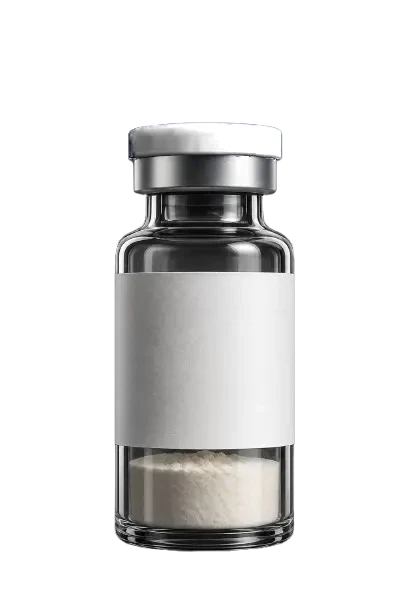
Available sizes: 100 IU
Botulinum toxin is the neurotoxic protein produced by the bacterium Clostridium botulinum. It is the most potent biological toxin characterised, and that potency comes from extraordinary selectivity: it acts at one point in one process, the release of acetylcholine from nerve terminals.
That selectivity is what makes it one of the most widely used reagents in neuromuscular, synaptic and secretory research. Supplied as a lyophilised powder, 100 IU per vial.
The neurotoxin is a single protein of about 150 kDa, made of two chains joined by a disulfide bond:
Heavy chain (about 100 kDa): binds the nerve terminal and carries the toxin across the membrane.
Light chain (about 50 kDa): a zinc-dependent protease, the part that does the work inside the cell.
Seven serotypes (A to G) are recognised. They share this architecture but cleave different targets, which is why serotype matters when a study is designed.
The toxin acts in four steps, each one studied in its own right:
Binding: the heavy chain attaches to gangliosides and a synaptic vesicle protein on the surface of cholinergic nerve terminals.
Uptake: the terminal takes the toxin in by endocytosis, inside a vesicle.
Translocation: as the vesicle acidifies, the heavy chain forms a channel and the light chain crosses into the cytosol.
Cleavage: the light chain cuts a SNARE protein (SNAP-25 in the case of type A). Without it, vesicles cannot fuse with the membrane, and acetylcholine is not released.
The result is a block of transmission at the neuromuscular junction that is reversible over time: the terminal recovers as new SNARE protein is made and new nerve sprouts form, which is itself a subject of research.
Neuromuscular transmission and synaptic vesicle exocytosis
SNARE protein biology and membrane fusion
Nerve terminal sprouting, remodelling and functional recovery
Cholinergic control of glandular secretion models
Neuropeptide release and pain signalling models
Muscle activity models in dermatological research
Receptor binding, toxin engineering and neutralisation assay development
Activity is expressed in units (IU) rather than by mass. One unit is defined by a biological assay of potency, not by weight, and units are specific to the preparation they describe: a unit of one preparation is not interchangeable with a unit of another. Studies that compare results should account for this.
Storage: keep the lyophilised powder refrigerated at 2 to 8 °C, protected from light, until use.
Handling: botulinum toxin is a potent neurotoxin. Handle it only in a suitable laboratory, by trained personnel, under your institution's biosafety procedures: gloves, eye protection, and care to avoid aerosols, splashes and sharps.
Spills and disposal: inactivate solutions and contaminated materials before disposal, for example with sodium hypochlorite solution or by autoclaving, as your institution's procedures specify.
Supplied strictly for laboratory and in-vitro research. Not for human or veterinary use, not for injection, and not for cosmetic, diagnostic or therapeutic use.
Certificates of Analysis are published for tested products and batches. A certificate is a batch-specific record: it reports what was measured, by which method, on a stated date, against a batch identifier. It is evidence about the sample analysed at the time of analysis, and it is silent on attributes it does not list and on what has happened to the material since.
The batch number is the field that connects the document to a physical vial. Where the identifier on a vial does not appear on a certificate, the certificate does not describe that vial, however thorough the analysis behind it was. Batch records can be searched directly, and the guides below explain what each field establishes and what it does not.
Supplied for laboratory research use only. Not for human or veterinary use.